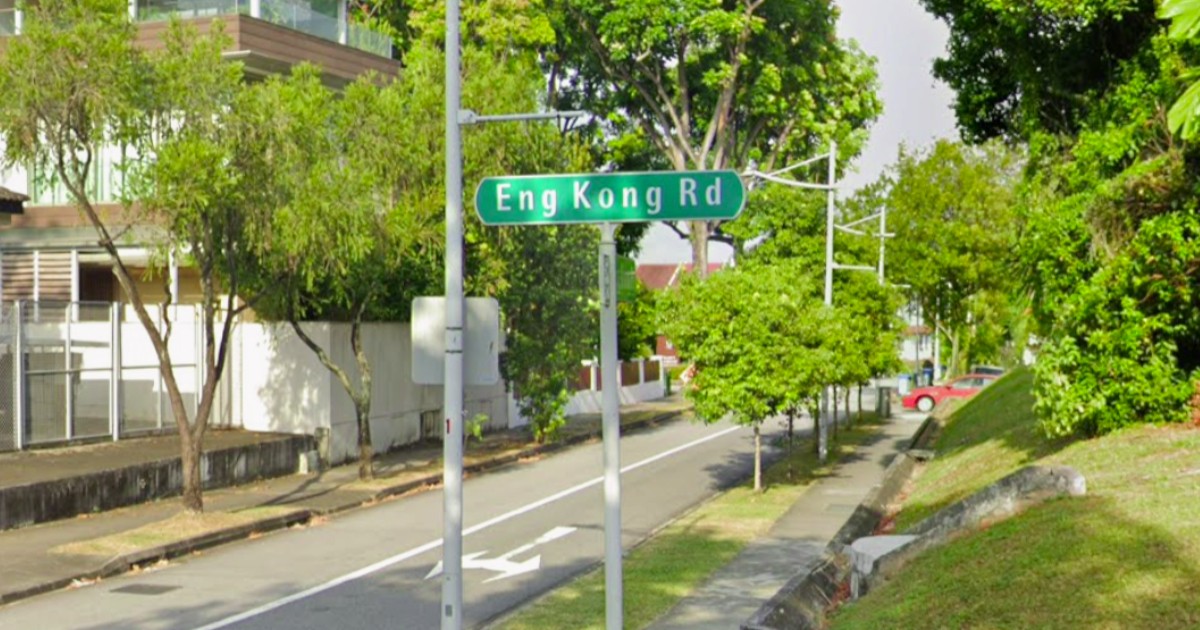
Two brothers who were excluded from their late mother's will are set to receive $600,000 following a Singapore High Court ruling over the sale of a family property along Eng Kong Road.
The court ruled that an agreement between their two other brothers to distribute the money was legally binding, bringing a significant development in a family dispute that had continued for years.
The semi-detached house was sold for $5 million in 2022. Under the agreement, George Chan Yip Tong and Jack Chan Yip Tong were each supposed to receive $300,000 from the proceeds.
However, disagreements over the arrangement prevented the money from being distributed, eventually leading to legal action.
Family Dispute Began After Mother's Death
The brothers' family dispute began after their mother died in December 2012.
Her will named two of her surviving sons, David Chan Yip Tong and Franklin Chan Yip Tong, as beneficiaries, alongside two granddaughters. George and Jack were not included among the beneficiaries.
Relations between the brothers subsequently deteriorated as disagreements emerged over their late mother's estate and finances.
In 2018, their uncle, Tam Sook, travelled to Singapore in an attempt to reconcile the family. He proposed that David and Franklin each contribute $300,000 from the eventual sale of the Eng Kong Road property, allowing George and Jack to receive $300,000 apiece.
Although the two brothers initially agreed to the proposal, the arrangement was not carried out amid disagreements over its terms.
Handwritten Agreement Became Central to Court Case
The dispute resurfaced in September 2021, when Franklin informed David that he had found a buyer willing to pay $5 million for the property.
During a meeting to discuss the transaction, David insisted that Franklin agree to the $600,000 payout before he would sign the Option to Purchase.
A handwritten note was subsequently prepared, setting out the commitment to pay George and Jack $300,000 each. Both David and Franklin signed the document, after which David signed the property sale paperwork.
Franklin later withdrew his support for the agreement, claiming that he had signed it under duress and arguing that the document was invalid.
Despite the disagreement, the property sale was completed in April 2022.
The disputed $600,000 was placed in a joint account requiring authorisation from both brothers for withdrawals. The funds remained there because Franklin would not approve the payments to George and Jack.
High Court Rejects Claim That Agreement Was Invalid
Franklin challenged the agreement in court, arguing that it lacked consideration and had been signed under economic pressure.
However, Justice Christopher Tan rejected these arguments.
The judge found that David's cooperation in proceeding with the property sale provided value in exchange for Franklin's promise to make the payments. The court also found insufficient evidence to establish that Franklin had been subjected to economic duress.
The judge noted that Franklin had continued with the transaction despite his objections and had other options available to him.
The court therefore concluded that the handwritten agreement was valid and enforceable.
$300,000 Each for Two Brothers Left Out of Will
The High Court ordered that the $600,000 set aside from the property sale be distributed according to the agreement, with George and Jack each receiving $300,000.
Franklin's attempt to recover a share of the disputed funds and compensation for alleged losses arising from the delay was dismissed.
Although George and Jack were excluded from their mother's will, the court's decision means they will receive the money under a separate agreement made by their brothers.
The $600,000 dispute is only one part of the family's prolonged legal conflict, which has also involved disagreements over rental income, estate finances and a defamation lawsuit.
The ruling highlights the importance of clear, enforceable agreements when family members make financial arrangements involving inherited property and the distribution of sale proceeds.